
The 16 most common HRMS modules & features
Choosing the right HRMS can feel overwhelming. Start by identifying the needed features, functions, and modules to support your goals.
'HRMS' can mean different things: some see it as a basic employee database, while others see it as a comprehensive system with many modules. Here are summaries of the sixteen most common HR modules and their key elements.
- HR database
- Recruitment
- Onboarding
- Performance management
- Benefits administration
- Workforce management
- Time and attendance
- Absence and leave management
- Learning and development
- Talent management
- Succession Planning
- HR analytics
- Payroll
- Employee wellness
- Multi-territory workforce management
- Employee self-service
1. HR database
Not so much a feature as a foundation for all the rest, an HRMS stores your employee records. This can range from basic information such as name, address, telephone number, and job role, to a complete work record, including performance management assessments and training undertaken.
This may be the most straightforward feature of your HRMS, but, in a sense, it’s also the most critical, as it stores personal information (possibly including bank details for payroll purposes), and the system’s data security is fundamental.
2. Recruitment
A recruitment module manages internal form and authorization processes, allowing managers and HR to post ads and documents online, with applicant tracking and screening.
It may include talent pools, which are searched for candidates. Recruitment modules widely adopt social media, with compatibility for platforms like LinkedIn being standard. Social features are a key vendor evaluation factor.
Common recruitment module features include:
- Customized pipelines for different roles
- One-click posting of jobs and job descriptions to a variety of job boards
- Automated assessment processes, inc. interview scheduling
- Applicant tracking
- Resume parsing
- Standard metrics and analytics for candidate profiles
- Mobile app
- Gamification (though opinion is divided between the pros and cons)
- Social media interface
- Digitized offer management
3. Onboarding
Once you have your new hires, they need to be guided through your organization’s onboarding and induction procedures.
This process can be improved through automation, greatly decreasing the workload for both managers and the HR team: recruits can be ‘introduced’ to the necessary people and the organization itself; there may be automatic notifications to relevant departments for issues like building access, user accounts, security passes, and more.
In an ideal system, the onboarding functions also interface with the performance and talent management modules.
Common onboarding module features include:
- Pre-first day preparation
- Easy (and paperless) setup of accurate employee records
- Provision of essential information about the company and key personnel
- Gamified learning
- Automatic scheduling of essential meetings
- Compliance with legislative mandates
- Goal-setting as a basis for the probationary period
4. Performance management
Automating the appraisal process, recording and tracking objectives and targets, this module should incorporate your competence framework, job standards, and/or other relevant systems.
Common performance management module features include:
- Setting and managing personal performance goals
- Links to a competency framework
- Scheduling of appraisal and review meetings
- 360 performance feedback
- ‘In the moment’ feedback tools
- Big Data gathering for a broader picture of individual performance
- Links to talent management and succession planning functions
GET HRMS RESEARCH & KNOWLEDGE RIGHT TO YOUR INBOX
Covering the key issues faced by businesses selecting and implementing HRMS.
5. Benefits administration
Benefits management is all about providing timely information and aiding employees to make the right choice for their circumstances. This module should manage and monitor employee benefits, healthcare, pension/welfare packages, track enrolment options, and any financial implications.
Common benefits administration module features include:
- Online open enrollment
- Automated communication of enrolment options and information
- Plan comparison tool to aid employee choices, including costs and contribution breakdowns
- Automatic event management of the benefits life cycle
- Legislative compliance for your territory
6. Workforce management
Primarily a scheduling feature, this HRMS module should closely integrate with (and is often combined with) time and attendance and leave management. Likewise, real-time functionality may involve connections to other business intelligence systems (e.g., ERP and CRM) to align workforce deployment with changing needs.
Common workforce management module features include:
- Scheduling and shift management
- Workflow monitoring
- Management dashboard with real-time data and metrics
7. Time and attendance
Alongside payroll, this is probably one of the longest-standing automated HR functions: the time clock. These days, such systems often incorporate biometric identification to avoid ‘buddy punching’ practices and will link directly to (or be an integral part of) the workforce management module, with information links to your payroll and accounting software.
Common time and attendance module features include:
- Employment attendance tracking
- Time clock management
- Biometric systems
- Functionality for remote and mobile workers
- Legislative compliance (e.g., minimum mandated rest breaks)
8. Absence and leave management
Your leave management module automates the allocation, booking, approval, and tracking of absences like vacations, illness, parental leave, or jury duty. Request and approval processes should be streamlined, with outcomes integrated into team calendars.
Common absence and leave management module features include:
- Self-service leave requests
- Integration with workforce management (scheduling) and time and attendance functions
- ‘Account management’, tracking accrued vacation time and usage.
- Metrics and analytics, including absence levels and trends
9. Learning and development
Often using the results of the performance management process as a starting point, this module may create individual training plans for staff, handle bookings (for training courses and other learning options), and oversee the follow-up evaluation and feedback process while monitoring training costs against budget allocations.
Common learning and development module features include:
- Learning portal
- Training recommendations linked to role, skillset, and career aspirations
- Individual user learning plans
- Setting and managing goals
- Links to a competency framework
- Streamlined learning administration (reducing the HR overhead)
Guide: 52 features to look for in your next HRMS
10. Talent management
Focusing on identifying individuals with potential, this module should help set up talent pipelines to prevent critical skills and experience shortages that could affect performance. Links to recruitment, learning and development, and performance management should be smooth.
Common talent management module features include:
- Alignment with organizational strategic business goals
- Identification of career paths and individual career planning
- Integration with key recruitment campaigns
- Reward benchmarking (internal and external)
11. Succession planning
Linked to talent management, succession planning involves a structured process to place the right employees on specific career paths that lead to targeted job roles and positions. The aim is to ensure that your business-critical roles and responsibilities are always filled. Essentially, you’re futureproofing your workforce, and the right HRMS can support that goal.
Key succession planning activities that an HRMS can support include the following:
- Identification of employees ready for advancement or with the potential to be so based on performance management data.
- Established career paths tailored to your organizational and business needs.
- Mapping of the process against an in-house competency framework.
- Gap analysis and creation of structured personal development plans tailored to identified individuals.
- Tracking of progress against career goals and development plans.
- Management of coaching and mentoring programs.
12. HR analytics
Often incorporated as functions within other modules, HR analytics provide reporting capabilities (frequently in the form of libraries of HR metrics and benchmarks), assessing and analyzing the data gathered and stored with the HRMS (and other business systems) to provide strategic and predictive insights that can be used to guide the business strategy of the organization.
13. Payroll
A payroll function calculates and pays salaries, withholds taxes, and manages paychecks or direct deposits.
While traditionally handled by dedicated software, more companies now integrate payroll into HRMS. This allows access to employee data like ID, banking details, and hours, stored in HRMS, offering benefits like improved security, accuracy, compliance, and centralized access.
14. Employee wellness
Over the past few years, employee wellness has gained importance for many organizations, especially due to the pandemic. This includes wellness programs, informational initiatives, and promoting healthy habits like exercise and good diets.
A healthier workforce is more present and productive. An HRMS helps manage and track engagement, set wellness goals, and share health tips. Rewards and benefits related to wellness can also be added to compensation.
15. Multi-territory workforce management
Consistency in HR policies, systems, and processes is crucial, especially for organizations across multiple countries where employment laws and regulations vary.
While single-country companies can streamline HR, the rise of remote work and virtual teams necessitates a system capable of managing diverse tax regimes, labor laws, and compliance reporting. Using a separate HRMS for each territory defeats its purpose.
16. Employee self-service
Lastly, an essential feature of any modern HRMS is employee self-service. It's a must-have if you want your HRMS benefits to extend beyond the HR department and boardroom.
It can be as simple as allowing each employee to submit requests for paid time off, or as comprehensive as providing a full HR portal with an individualized dashboard for every worker. This dashboard offers access to various HR services, from selecting benefits options to booking and virtually attending the latest training and development sessions.
A note on HR software module overlap
that some of the above modules and features will probably overlap in terms of processes or categories. For example, benefits management might fall under the payroll banner, and indeed payroll itself might be ‘filed’ under the broader heading of compensation management, taking in the wider reward and recognition packages.
Final thoughts
With countless HRMS features and execution variations (like AI chatbots or gamified recruitment tests), the combinations seem endless.
The key is thorough project planning before diving into the HRMS world. Research, analyze, and talk to stakeholders about essential functions. Answering these fundamental questions about your business first is crucial. It prevents distraction by the latest trends and guides you to the ideal HRMS.

Free white paper
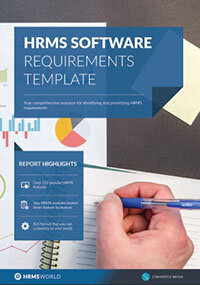
HRMS Requirements Template
Free HRMS requirements template (over 130 features) customizable for your organization
Featured white papers
-

-
-
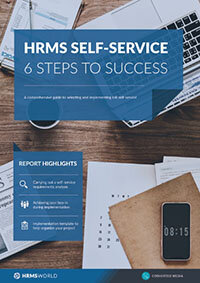
HRMS Self Service - 6 Steps to Success
Your comprehensive guide to selecting and implementing HRMS self-service
Download
Related articles
-

Which features should your mobile HRMS app prioritize?
A guide to the features your HRMS mobile app should make as accessible as possible
-

Best open source HRMS systems
Top open source HRMS options that give you total freedom for customization at a code level.
-

Five HR software systems to suit large companies
Here are some of the best enterprise HR software systems for large companies