
Critical limitations of AI in HR
Today more than ever, people want to do meaningful work, and organizations want to maintain their competitive advantage by attracting and retaining the best talent. AI is widely discussed as a tool to support this, but its actual impact (and limitations) are more nuanced than many early narratives suggested.
AI technology in HR
AI has shown tremendous potential for solving HR problems, including taking care of service tickets, producing reports, and ensuring data is stored and disseminated accurately with less human intervention.
In 2025, 43% of organizations reported using AI in HR tasks, up considerably from the 26% the year before. Recent research also suggests that AI literacy and formal training are becoming priorities for HR teams; about 61% plan tailored AI learning programs, and 44% of HR professionals have completed AI training.
However, the adoption picture isn’t wholly positive. Only a small percentage of the businesses exploring AI have formally embedded it into their core HR processes.
A Brightmine study found just 3.6% have formal AI governance policies guiding HR use, and many teams lack the time or skills to implement it effectively.
Limitations of AI in HR
It is widely agreed that there are some things AI can’t replace, such as human judgment, creativity, emotional intelligence, and genuine empathy (to name a few), all of which are essential to conflict resolution and career coaching.
A frequently under-reported risk in discussions about AI in HR is its impact on employee trust and experience.
Research from Cornell University suggests that perceptions of fairness, transparency, and job security significantly influence outcomes when AI is introduced.
Efficiency metrics alone don’t capture the full picture. Clear communication, strong governance, and involving staff in AI design help prevent job anxiety and low morale.
Payroll
Speaking of which...Compensation and payroll still demand human oversight. Payroll mistakes have immediate legal and morale consequences, and automation errors cannot be left unverified.
Even well-designed AI tools require human checks to ensure compliance with evolving tax codes, cross-border payment rules, and individual contract variations, preventing mispayments that can erode employee trust.
Discover the four key principles of managing payroll using your HRMS with our free guide
Automating pay without verification has led to real cases where employees were wrongly terminated, unpaid for weeks, and eventually left the organization. Even though these tools have improved by leaps and bounds since then, what hasn't changed is the need for rapid human intervention when systems fail.
AI and HR: What does work
HR professionals have plenty of new tools and technology at their fingertips. The goal of any of these technologies is to free up HR and Payroll professionals from redundant and repetitive tasks so they can focus on more strategic ones.
It is true that AI is extremely good for repetitive tasks. AI-driven processes can replace workers doing routine, methodical tasks, which helps to better utilize a human’s ability for problem-solving, leadership, emotional intelligence, empathy, and creativity.
Further risks and human elements
As in the above example, biases in AI systems can arise from historical data reflecting existing inequalities. Without robust auditing, tools for hiring or performance evaluation may perpetuate unfair outcomes. Governance frameworks and representative datasets are essential to avoid these pitfalls.
AI also raises worker concerns about surveillance and job displacement. Many employees still express worry about being monitored too closely or replaced by automated systems, which, again, can harm morale and retention if not handled with transparent communication.
Where AI still falls short (TL;DR)
- Transparency: Some AI systems function as 'black boxes,' making it hard for HR leaders to explain outcomes to employees, which undermines trust.
- Emotional intelligence: Machines cannot interpret nuanced sentiments in the way humans can...especially in conflict scenarios or performance coaching.
- Contextual judgment: AI still lacks full context awareness, particularly for individual employee circumstances or cultural nuances.
Final thoughts (a balanced perspective)
AI HR tools were in their infancy when this article was originally published; now they're widely used across recruiting, onboarding, performance management, and reporting. But, as with anything else, AI's success depends on how thoughtfully it's integrated with human judgment, ethical frameworks, and employee experience in mind.
The goal should be clear: not just automate tasks but improve fairness, clarity, and experience for employees and HR professionals alike. Done right, AI enables HR teams to allocate time toward strategic priorities that machines can’t address. Done poorly, it risks undermining trust, fairness, and human connection—the very foundations of effective HR.

Free white paper
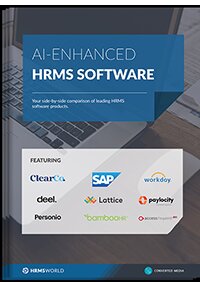
AI-enhanced HRMS comparison guide
Compare the best HR AI-enhanced HRMS software side-by-side.
Featured white papers
-
AI-enhanced HRMS comparison guide
Compare the best HR AI-enhanced HRMS software side-by-side.
Download
Related articles
-

How HR technology can have a positive impact on employee wellbeing
Employee turnover can be expensive for a business. Improved employee wellbeing should cause a red...
-

Predictive Analytics: Using your HRMS to get more out of your HR data
Using HR data to utilise effective predictive HR analytics and where your HRMS can provide support.
-

The future of HR automation (and AI)
How will HR automation and AI affect the future of HR technology?