
Best open source HRMS systems
When it comes to your HRMS, are you looking for an off-the-shelf, plug-and-play standard package? Or are you searching for something a little more customizable? If your customization needs go beyond superficial changes like renaming fields or adding logos, and you need access to the underlying code, an open-source HRMS might be the ideal solution.
What is an open-source HRMS?
An open-source HRMS provides access to the software's source code, allowing organizations to tailor the system to their specific requirements. This flexibility is particularly beneficial for businesses with unique processes or those requiring integration with other systems.
Is open-source HR software right for you?
An open-source HRMS may be right for you if:
- Standard systems fall short of meeting your specific process or technological needs.
- You have an in-house team (or other capacity on-staff) with software development skills and experience.
- Budget constraints make free or low-cost solutions appealing.
- Control and flexibility over your software align with your business principles.
Check out our HRMS product comparison engine to compare the best open-source HRMS
Selecting an open-source HRMS
When selecting an open-source HRMS, keep in mind:
- Extra features or user support packages often cost extra.
- Feature sets might be more limited than those of proprietary systems, though this is improving.
- Maintenance and updates often rely on community contributions rather than dedicated vendor support.
- Custom developments are typically shared under the same open-source license, allowing others to access and use your enhancements.
Top open-source HRMS solutions
Below is a list of leading open-source HR management systems, presented in no particular order. Click to learn more about each system:
1. iceHRM
iceHRM is available in three versions, all with source code access. The free version lacks features available in the Pro and Enterprise editions, like leave management, LMS, recruitment, document management, and travel management.
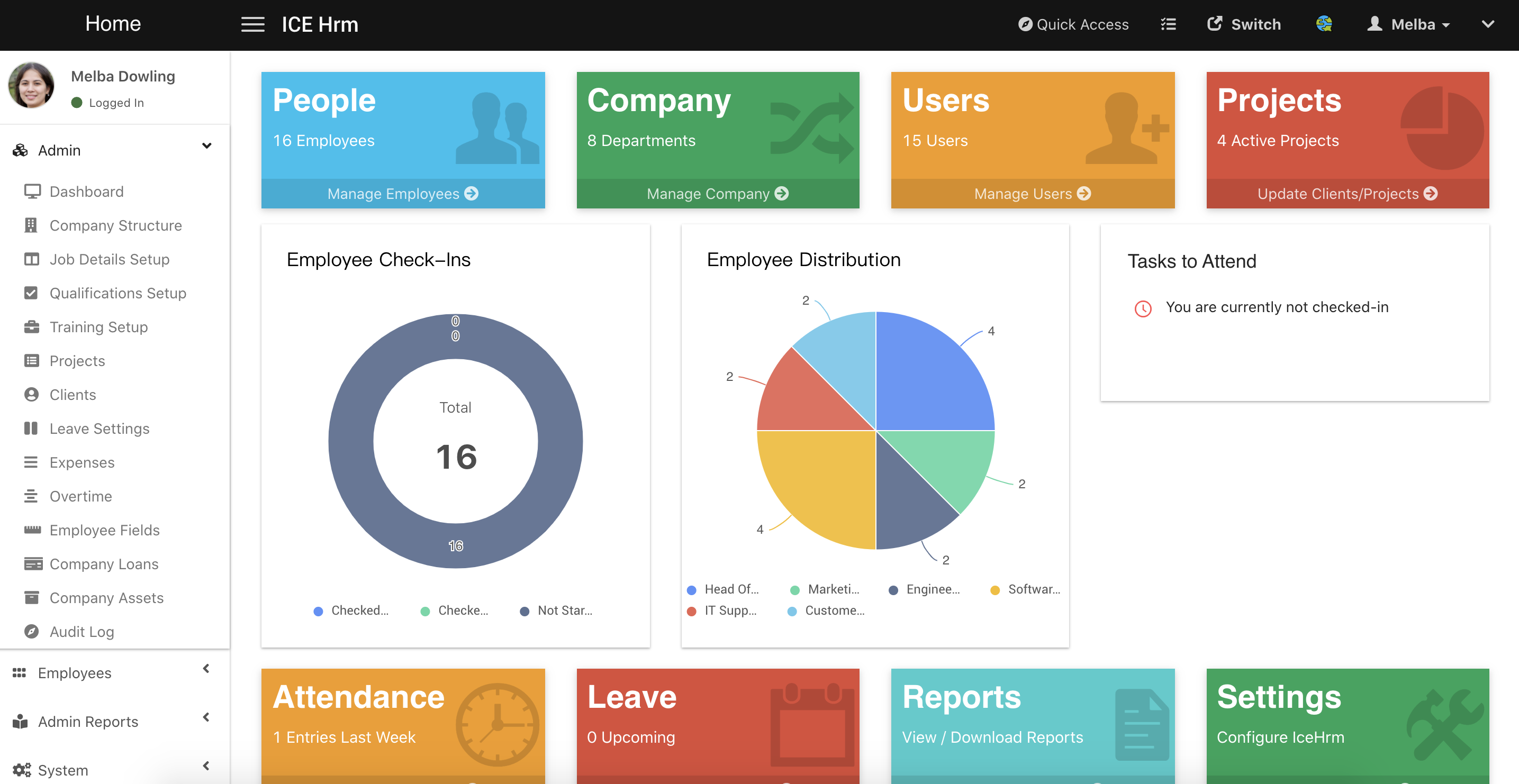
That said, the free version is a solid and well-tested basic HRMS package you can tinker with, including basic employee records, company information (structure and organization), timesheets, and attendance management (including attendance comparison charts).
If you’re willing to pay (for the license, the hosting, or both), then you have a very sophisticated and wholly customizable system. Reviews are few but uniformly positive.
2. OrangeHRM
OrangeHRM is one of the longest-running open-source HR management systems. While professional, enterprise, and SaaS versions are available, the free basic option is the most widely used.
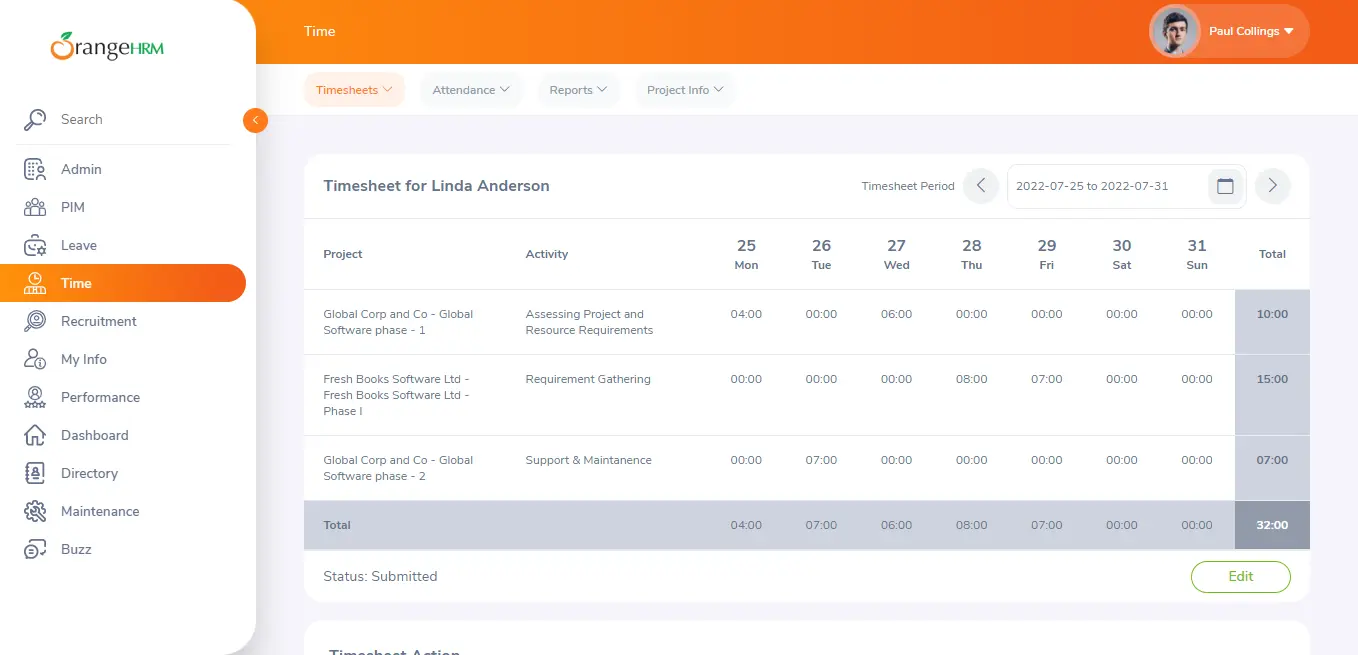
It provides records and information management, time and attendance, leave management, recruitment, performance management, and employee self-service. OrangeHRM’s entry-level option is among the most feature-rich available.
Functionality receives consistent praise in reviews, though support and responsiveness are rated lower. Most reviews are from users who have not purchased paid support or maintenance.
3. Sentrifugo
Designed for organizations of all sizes, Sentrifugo is an intuitive and highly configurable platform supported by Sapplica.

Sentrifugo has built up its product to be feature-rich by any standards, not just those of the ‘freebie open source’ brigade.
In addition to the usual HR and workforce management modules, Sentrifugo also offers performance appraisal management, background checks, interview scheduling, talent acquisition, and a comprehensive analytics suite. Reviews are limited but glowing, almost all being four- or five-star assessments.
The Sentrifugo website offers a support center, with a helpdesk and user forum to address common problems and concerns.
4. Odoo
Odoo is a comprehensive suite of open-source solutions that includes ERP, CRM, project management, and HRMS. While not an HRMS in itself, it stands out for its integration capabilities. If you require a customizable HRMS that integrates with other business systems, Odoo is a strong option.
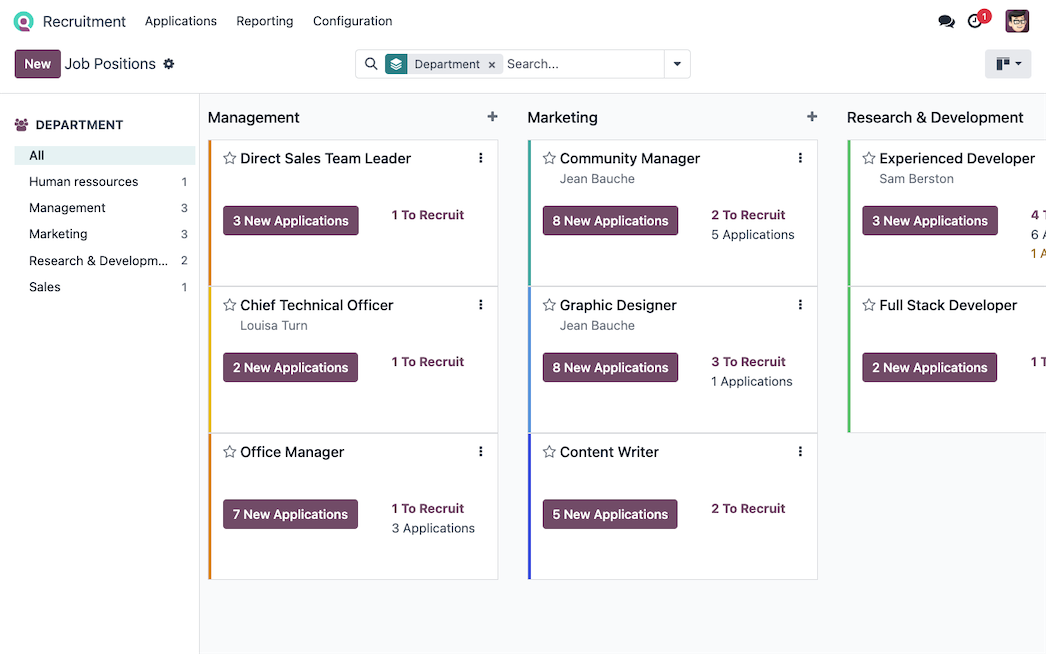
Core HRMS features include recruitment, leave management, expense tracking, and an appraisal tool. Reviews are consistently positive, often highlighting Odoo’s user-friendly design.
The platform’s extensive functionality makes it well-suited for companies seeking flexible solutions across multiple departments.
5. Open HRMS
Open HRMS serves both small businesses and large enterprises, offering a comprehensive suite of HR functions, including records management, time and attendance, onboarding, benefits management, payroll (not included in the base package), performance management, and automated recruitment.

One caution: online customer reviews are hard to find, so your selection process should include a focus on user recommendations, references, and other feedback.
6. Open Baraza
The Open Baraza open source HRMS is offered alongside a suite of other business solutions (all based on the same framework), including finance and investment management packages, and more specialized sector-specific software for real estate and academia. If nothing else, this shows its integration capabilities.
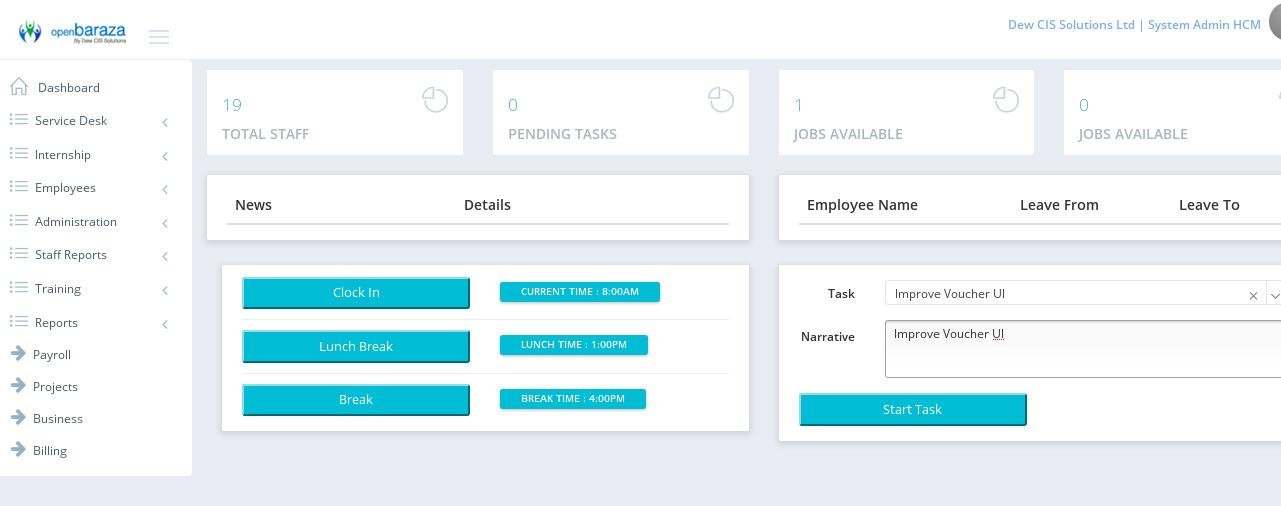
The HR option includes an employee database, time and attendance functionality, learning management, recruitment, performance management, payroll, and employee self-service. So far, so standard. However, Open Baraza also offers project management, features to manage your casual workforce, and even arbitration.
There are few online reviews, but those that are there are enthusiastic.
7. iHRIS
Now we’re getting specific… iHRIS is open source HR software for health organizations. It is used for health workforce management, regulation, and training, and is intended for health ministries, councils, and service delivery organizations. It offers five modules: workforce tracking and management, learning management, workforce planning, recruitment, and management of sector-specific qualifications.
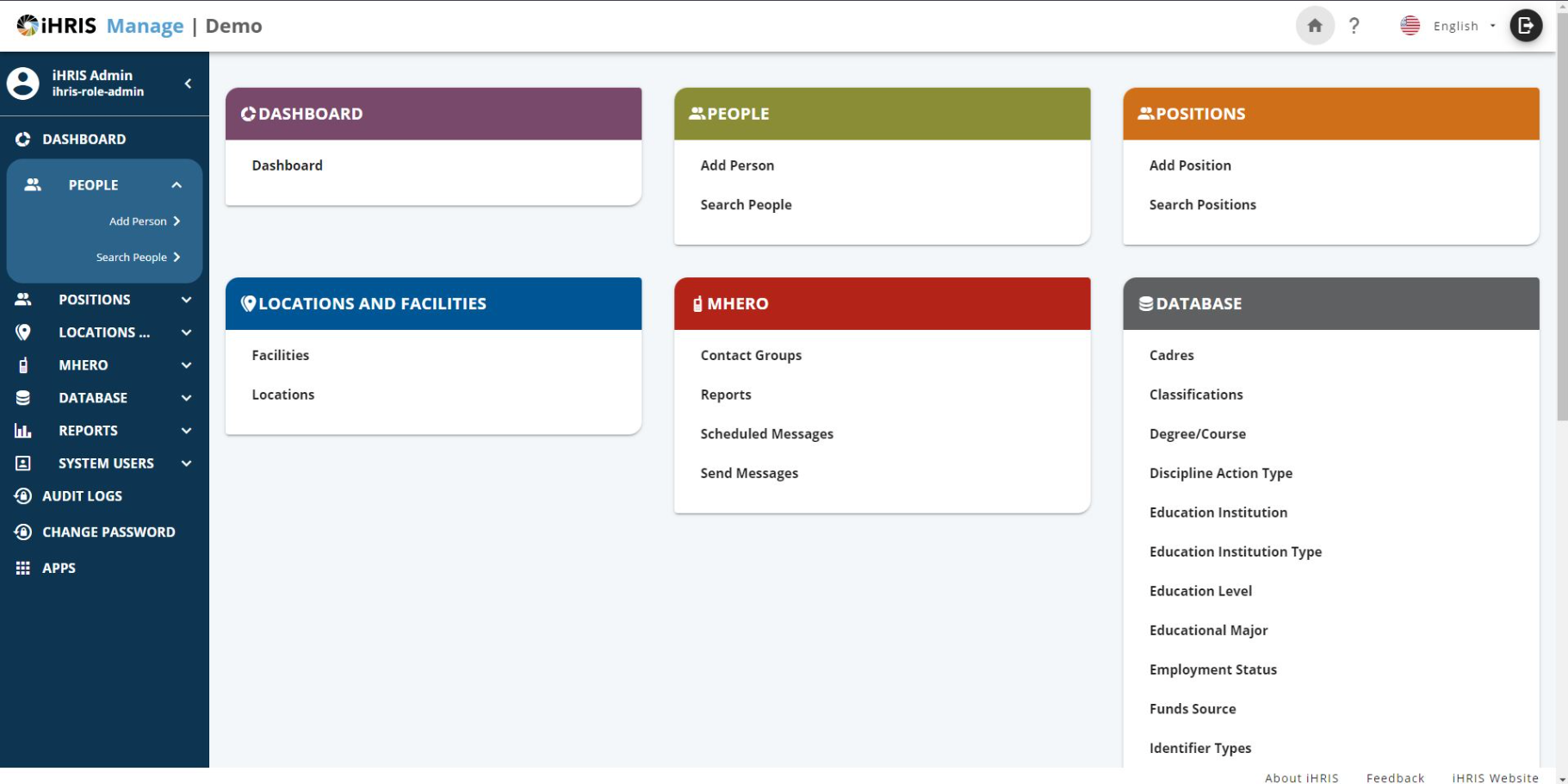
The package comes with access to various implementation and development resources, including an implementation toolkit of template worksheets, forms, and case studies.
Available in various languages (thanks to the established developer community), iHRIS has international operations at its heart and is compliant with international data exchange standards.
8. Jorani
Jorani is open-source HR software specializing in leave management. Focusing on the basics, Jorani is a free HR system that simplifies leave and overtime requests with one-click ease and offers a range of standard reports. It suits organizations of any size, including complex enterprises with branches, subsidiaries, and departments across multiple countries, helping manage employee time efficiently..
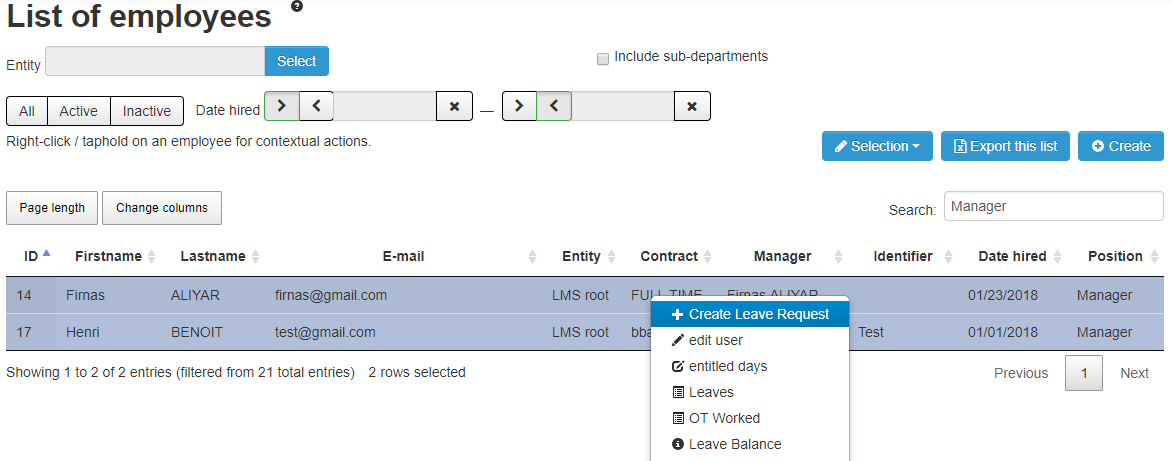
Jorani is available in English, French, Spanish, Italian, German, Dutch, Russian, Ukrainian, Persian, Khmer, Vietnamese, Czech, and Turkish (though the documentation comes in English and French only).
9. Frappe HR
Frappe HR is a modern, user-friendly, and 100% open-source HR software that simplifies HR and payroll operations. Built on the Frappe Framework, it offers modules for recruitment, employee lifecycle management, leave and attendance, expense management, performance management, payroll, and taxation.

Its integration with ERPNext ensures seamless accounting processes. The platform is highly customizable, supports mobile access, and is backed by a robust community.
10. Dolibarr
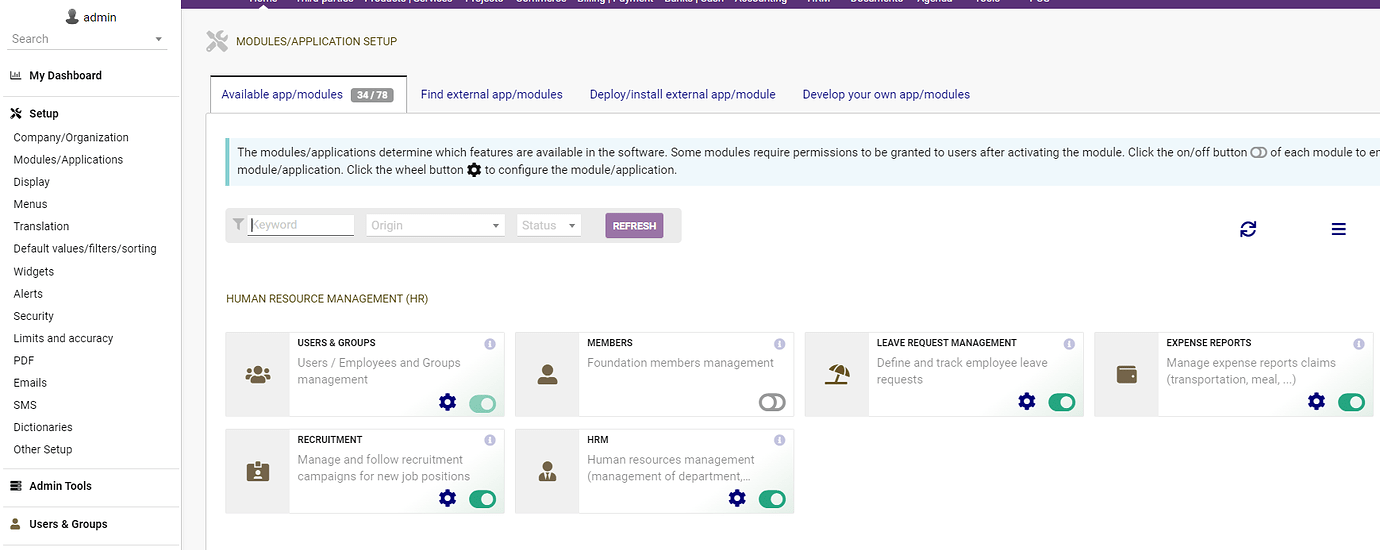
Dolibarr is an open-source CRM and ERP solution with a versatile HR module offering features like payroll automation, recruitment, onboarding, leave management, contract handling, and CV management. Its modular design lets users activate only the required features, with strong community support providing continuous updates.
Conclusion
Open source HRMS isn’t for everyone, and the more customization you want, the more work it takes. However, if it fits your business needs, there are a growing number of systems available that offer enhanced functionality and specialization. The systems above are among the most widely available options.

Free white paper
Top 10 HRMS Comparison
Compare the top HRMS software
Featured white papers
-
-
-
Working with HRMS consultants: five steps to success
Find and onboard the right HRMS consultant for your project with this guide
Download
Related articles
-

The 16 most common HRMS modules & features
There is a great wealth of HRMS modules available to you. But what are some of the most common on...
-

Five HR software systems to suit large companies
Here are some of the best enterprise HR software systems for large companies
-

Performance management software guide: how to deliver effective results
How can your HRMS performance management module