
How HRMS can improve HR benchmarking
Benchmarking has long been a best practice route to better business performance, comparing your organization with competitors’ performance measures in order to develop stretching but relevant targets. After all, you’re competing; you need to understand what you’re up against. It also fits well alongside methodologies such as Six Sigma's define, measure, analyze, improve, and control cycle.
Put simply, benchmarking can be fundamental to continuously improving performance, but a successful benchmarking exercise needs data. Unsurprisingly, your HRMS is a significant contributor…
Your HRMS data can support…
There are two different kinds of benchmarking that HRMS data can drive:
- Performance benchmarking: Comparing your people metrics against similar organisations helps you identify performance gaps and keep pace with (or move ahead of) the market. That said, the value depends not just on the rigour of the exercise, but on what you do with the results. Performance benchmarking too often stops at identifying where you sit in the league table,and if the position looks comfortable enough, the impetus for change quietly disappears.
- Best practice benchmarking: If performance benchmarking is about what, then this is about why (why is our performance below that of our benchmarked peers?) and how (how do we close the gap?). Focusing on specific people processes and comparing them against a recognised sector leader allows you to understand exactly where your performance falls short and what needs to change.
Here are three specific ways HRMS data supports benchmarking in practice:
1. Compensation and reward
If you want to attract the best talent, you need to offer a competitive reward and benefits package. Drawing on external sources such as salary.com and Mercer, you can develop a comprehensive picture of salaries and compensation in your industry.
Cross-reference that against the data in your HRMS and payroll systems, and you'll quickly see where you stand, plus whether your offer is likely to hold up against the competition.
2. Turnover and retention
That same data helps you examine turnover and answer the question: how well are you keeping the talent you already have? One important caveat: a below-average turnover rate isn't automatically good news. Check first that it doesn't simply reflect low performers going unnoticed and unchallenged.
3. Your employer brand
Most organisations measure employee engagement through staff surveys or similar exercises. The next step (and a valuable one) is to layer in your people metrics and HRMS performance indicators to explore whether engagement and motivation are actually driving business results.
Benchmark that combined data against your competitors and sector, and you start to see how your organisation is perceived both internally and externally.

Free white paper
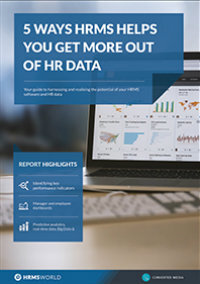
5 ways HRMS helps you get more out of your HR data
A comprehensive guide to the data analytics capabilities of your HRMS
Related articles
-

4 ways HR forecasting can improve workforce planning
How to use HR forecasting to improve company operations and impress C-suite
-

Five signs your HRMS needs an upgrade
If your HR software is making you work harder, not smarter, it’s time to take the plunge and seek...
-

How to identify employee costs using your HRMS
Employee costs can be difficult to pin down, but an HRMS will give you the tools to analyze and a...